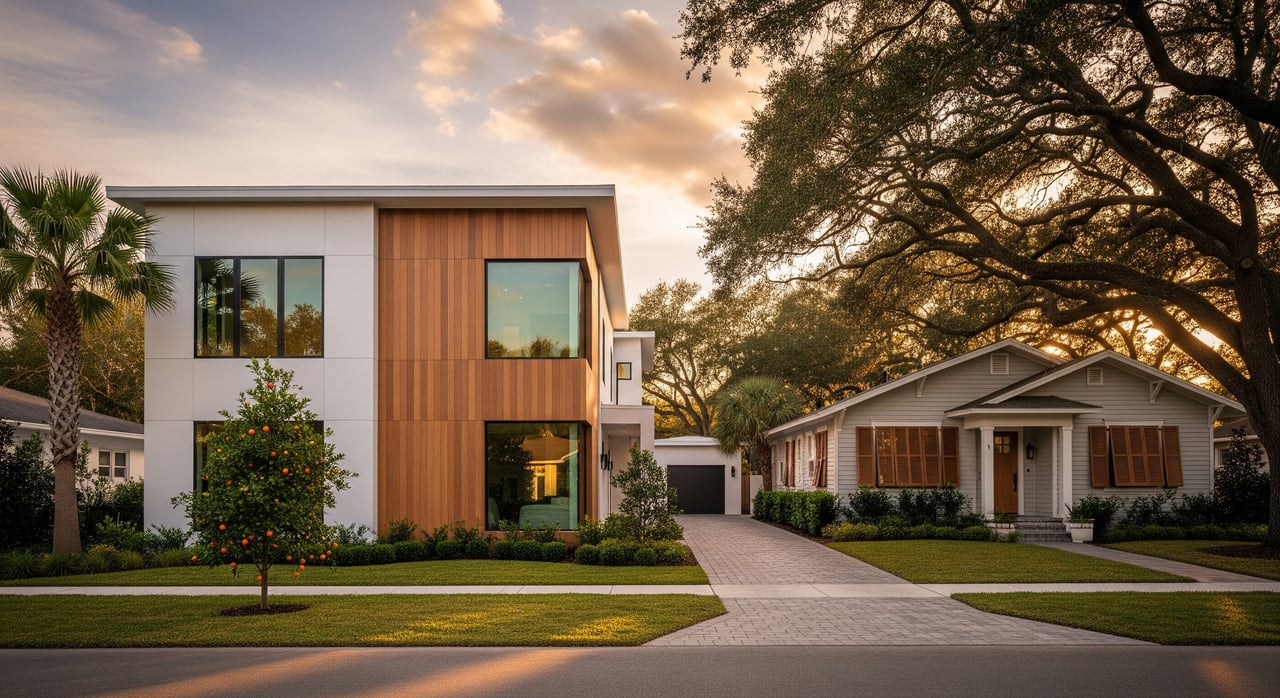
New Construction vs Resale in Winter Garden: True Costs
December 25, 2025
December 25, 2025
Think the cheaper sticker price is always the better deal? In Winter Garden and Horizon West, your total cost of ownership can tell a different story. You want a home that fits your life and your budget, without surprises. In this guide, you will see how to compare new construction and resale homes across every cost line, so you can make a confident choice. Let’s dive in.
When you compare homes, look past the price. Your true cost includes recurring expenses and one-time costs over time. In Winter Garden, these can vary by community and home age.
A new-build price has three parts: base price, lot premium, and upgrades. Builders may also offer incentives that lower your cash to close or your interest rate. Ask for an itemized price sheet and the incentive addendum in writing.
Resale homes list at a single price, but the condition and features are already set. You can negotiate price and credits based on inspection findings. Closing usually happens in 30 to 60 days, which can reduce temporary housing or storage costs.
Builders sometimes offer temporary or permanent rate buydowns. Request two loan estimates from your lender for the same price and down payment. One should model the builder buydown. The other should model a straight price reduction. Compare the monthly payment and the total interest over 5 to 10 years.
Orange County assesses property taxes on the land plus the improvements. For new construction, the full home value may not hit the tax roll until the certificate of occupancy. That means your first and second-year taxes can be different. Use the Orange County Property Appraiser to review nearby assessments and to confirm homestead exemption requirements. The Save Our Homes cap applies only to homesteaded properties.
Horizon West and other master-planned areas often include robust amenities. Pools, clubhouses, and landscaped entries can raise HOA budgets. Always ask for the current HOA budget, reserve study, and any scheduled increases.
Many newer communities also use Community Development Districts. CDDs finance roads, utilities, and amenities. They add an annual assessment that appears on your tax bill or as a separate line item. Learn how CDDs work by reviewing Florida Statutes Chapter 190, and check district listings with Orange County, FL. Request the official CDD disclosure, the current annual assessment, and the remaining bond term for the specific lot.
Insurance is a leading cost line that often changes by home age. Newer roofs, current building codes, and modern electrical systems can improve your insurability and premiums. Older roofs or prior claims can raise costs or limit carrier options. For guidance on policy types, wind mitigation credits, and rate factors, review the Florida Office of Insurance Regulation.
Flood risk is separate from wind. Do not assume a new home avoids flood insurance. Check the FEMA Flood Insurance Rate Map for each address, and ask for an elevation certificate if available. Start with the FEMA Flood Map Service Center.
New construction must meet current Florida Building Code. You may see higher-efficiency HVAC systems, tighter envelopes, and ENERGY STAR appliances. This can reduce your monthly electric bill. Ask the builder for the HERS score, insulation R-values, and HVAC SEER ratings. Learn general savings ranges from the U.S. Department of Energy and review ENERGY STAR new homes guidance for what features to look for.
For resales, request the last 12 months of utility bills. Compare them to builder-modeled estimates for the new home. Actual usage always depends on how you live, but the specs can help you gauge likely differences.
New homes typically have lower near-term maintenance. Most builders include a limited workmanship warranty and a longer structural warranty. Many communities use third-party programs similar to common 10-year structural warranties. Review what is covered, what is excluded, and whether the warranty is transferable.
Resale homes can have immediate needs like roof, HVAC, or water heater replacement. Use your inspection to price out near-term items and to set aside a reserve. For ballpark planning, national guides like roof replacement cost ranges can help, but verify with local contractors. Your 5 to 10-year plan should include likely replacement windows for the roof and HVAC based on age and condition.
New builds can take months to complete. That may mean interim housing or a lease-back plan. Inventory homes may be ready sooner and can come with incentives. Resales usually close faster, which can reduce carrying costs.
In parts of Winter Garden and Horizon West, a steady supply of new homes can influence pricing and incentives. High supply can improve your negotiating power on new construction. In tight pockets with fewer resales, a well-kept existing home can hold value and move quickly. Compare homes within the same micro-area and amenity set for the best read on value.
Use this checklist to collect the right documents, then model monthly and 5 to 10-year totals.
Choose new construction if:
Choose resale if:
You do not have to build this model alone. Our team helps you gather HOA budgets, CDD disclosures, insurance quotes, and real utility data, then we stack your options side by side. If you want clarity on new construction vs resale in Winter Garden, we can guide you through tours, contracts, and negotiations with a calm, numbers-first approach.
Ready to see the true monthly and long-term cost for each home on your shortlist? Reach out to The Acevedo Team for a friendly consult and a customized cost comparison.
April 2, 2026
March 26, 2026
March 24, 2026
March 12, 2026
March 5, 2026
February 26, 2026
February 19, 2026

February 12, 2026
February 5, 2026
Our experience and excellent negotiating skills are the reason why you could trust us with one of the most important purchases of your life.