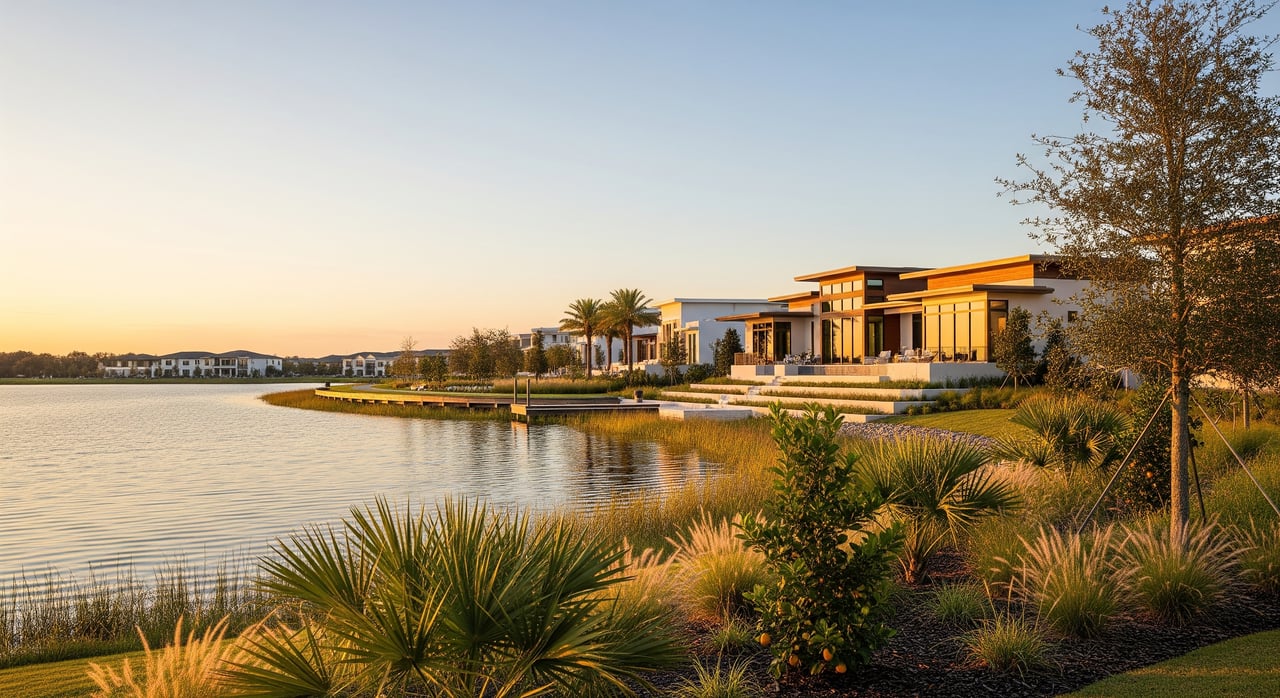
How Lake Nona’s Master Planned Community Serves Residents
December 4, 2025
December 4, 2025
What if your neighborhood was planned to make daily life easier from day one? If you are exploring Lake Nona in southeast Orlando, you have likely heard the phrase “master-planned community.” You want to know what that really means for you, your commute, your weekend routines, and your budget. In this guide, you will learn how Lake Nona’s master plan translates into real benefits, how amenities are funded and maintained, and what to review before you buy. Let’s dive in.
A master-planned community is a large, coordinated development built in phases by one developer or a closely aligned group. Plans usually include a mix of homes, parks, retail, schools, and supporting infrastructure. The goal is to deliver a complete place rather than a single subdivision.
Lake Nona is a master-planned community in southeast Orlando, developed by Tavistock-related entities and built around a health and life-sciences hub known as Medical City. The plan has rolled out over many years with a focus on healthcare, education, research, recreation, and placemaking. Its location near Orlando International Airport (MCO) connects residents to regional jobs and travel options. You can explore the developer’s vision and amenities on the official Lake Nona site.
Medical City brings hospitals, medical education, and research facilities together in one district. For residents, that often means shorter trips for specialty care and access to a range of local health services. Many buyers also value the nearby employment options in healthcare, research, and education.
Anchors like Medical City can support long-term housing demand and a resilient local economy. While individual property values depend on broader market trends, proximity to large institutional employers is commonly seen as a strength.
Lake Nona’s plan includes walkable nodes like town centers and neighborhood hubs, plus connected sidewalks and trails. This helps you make short trips to dining, coffee, or services without always using a car. In select areas, daily errands can be more convenient and enjoyable.
Walkability also supports an active lifestyle. Sidewalks, trails, and public spaces make it easier to get outside, meet neighbors, and spend more time in parks. Keep in mind that walkability varies by micro-neighborhood. Before you choose a home, check the specific address using tools like Walk Score and visit at different times of day.
Parks, pocket parks, linear greenways, and multi-use trails are common features in master plans like Lake Nona. These spaces provide easy access to outdoor activities for residents who want safe places to walk, bike, and play. Families also appreciate the variety of options close to home.
Because amenities are planned and maintained by community structures, green spaces tend to be kept in good condition. Programming, such as seasonal events or markets, can further strengthen community life and make weekends more engaging without leaving the neighborhood.
Master plans often coordinate with local school districts on future school sites and community services. This helps you evaluate school commutes and childcare logistics when comparing homes. Since assignments can change, verify the current school boundary for a specific address with the local school district and confirm capacity before you commit.
You should also confirm utility providers and whether any services are community-managed or handled by the county. Clarity on your monthly costs will help you plan a realistic budget.
Planned roadway networks, collector streets, and pedestrian facilities are designed to support growth. In Lake Nona, proximity to MCO and regional highways makes commuting and travel simpler for many residents. Peak congestion can still occur during busy hours, so it is wise to test your commute at the times you would normally drive.
Communities like Lake Nona often pilot technology-enabled amenities, public Wi-Fi in key areas, or data-informed services. These features can add convenience and shape a modern, innovation-forward identity. For residents, this can translate into new mobility options, energy pilots, or health and wellness programming as the area evolves.
A master-plan’s benefits rely on long-term operations and maintenance. In Florida, that work is often handled by two layers: the Homeowners’ Association (HOA) and a Community Development District (CDD), along with county or municipal services.
The HOA is a private non-profit that enforces community covenants and rules, manages common-area maintenance, and oversees day-to-day amenities like pools, clubhouses, landscaping, and community events. It funds these services with dues paid by owners and guided by an annual budget.
A CDD is a special-purpose local government created under Florida Statutes. It can plan, finance, build, and maintain infrastructure like roads, drainage, utilities, and parks. CDDs often issue bonds to build infrastructure early in the community’s life, then collect assessments to repay those bonds. Learn about powers and structure in Florida Statutes Chapter 190.
Many owners pay both HOA dues and CDD assessments. HOA dues typically cover amenity operations and community services. CDD assessments often appear on your property tax bill as non-ad valorem line items to repay bonds and maintain district infrastructure. For a clear view of how local assessments appear on tax bills, visit the Orange County Tax Collector and the Orange County Property Appraiser.
Assessments can change over time, and special assessments are possible for repairs or budget needs. Well-run HOAs and CDDs help preserve amenities and community identity, but governance rules can feel strict if you prefer fewer restrictions. Reviewing documents before you buy is essential.
Before making an offer, use this quick due diligence checklist:
Lake Nona’s master plan is designed to make daily life more convenient, healthy, and connected. Medical City brings nearby care and career options. Walkable nodes and trails improve day-to-day routines. Parks and public spaces add room to recharge and connect with neighbors. And the HOA/CDD framework helps maintain the amenities that draw buyers to the area in the first place.
To choose the right home, match the micro-neighborhood to your lifestyle, review HOA and CDD documents carefully, and confirm the numbers that will impact your budget. If you want a local team to help you compare communities, interpret disclosures, and negotiate with confidence, reach out to The Acevedo Team.
June 4, 2026
May 28, 2026
May 21, 2026
May 14, 2026
May 7, 2026
April 23, 2026
April 16, 2026
April 9, 2026
April 2, 2026
Our experience and excellent negotiating skills are the reason why you could trust us with one of the most important purchases of your life.