Living in Ocala Horse Country: Lifestyle and Home Choices
April 16, 2026
April 16, 2026
If you want more space, a quieter setting, and a lifestyle that feels tied to the land, Ocala’s horse country likely stands out for a reason. You may be dreaming of acreage, a mini-farm, or simply a home near open pastures and trail systems without being too far from daily essentials. This guide will help you understand what horse-country living in Ocala actually looks like, what kinds of properties you may find, and what to check before you buy. Let’s dive in.
Ocala and Marion County are closely tied to their equestrian identity. Marion County planning documents state that the Farmland Preservation Area is intended to protect agricultural and rural lands, preserve equestrian and rural character, and support the area’s Horse Capital of the World® designation. Those same policies also emphasize scenic views, open space, rural lighting, and infrastructure that stays at a rural scale rather than pushing urban-style development.
That identity shows up in everyday landmarks as well. The World Equestrian Center – Ocala describes itself as the largest equestrian complex in the United States and includes lodging, dining, shopping, and a spa. The area is also home to the Florida Horse Park, a 500-acre equestrian complex less than 10 miles south of downtown Ocala with permanent stalls, a covered arena, and trailer parking.
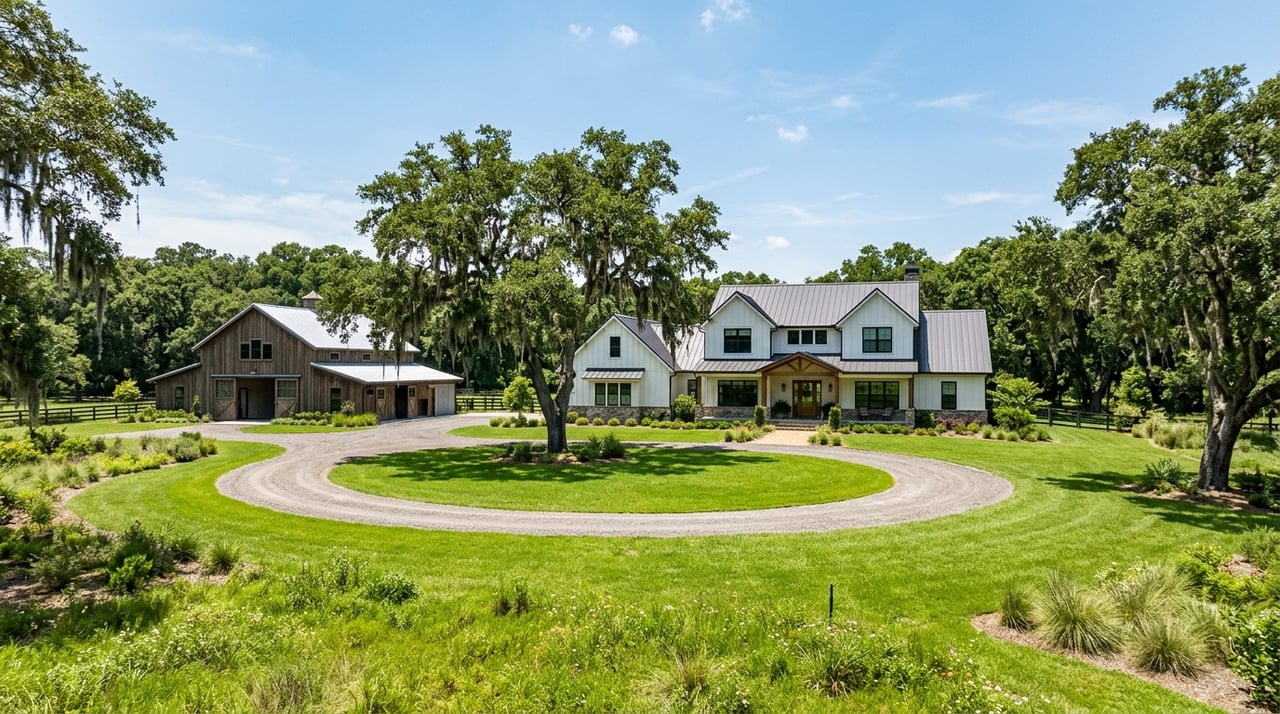
Living near Ocala’s horse country often means trading tighter subdivisions for more open surroundings. Instead of dense blocks and closely spaced homes, you are more likely to see fenced pastures, mature oaks, and roads that reflect the area’s rural character. According to an Ocala/Marion tourism release, horse farms in Marion County range from 2 acres to 4,500 acres, which shows how wide the lifestyle spectrum can be.
For many buyers, trail access is a major draw. The Marjorie Harris Carr Cross Florida Greenway offers more than 79 miles of equestrian trails, including access points at Santos Trailhead and Landbridge Trailhead near Florida Horse Park. Nearby public lands also support equestrian use, which adds to the appeal for buyers who want outdoor recreation woven into daily life.
You can still stay connected to city conveniences. The Downtown Ocala Trolley serves parking areas, landmarks, shopping, and dining districts in the city center. Combined with the amenities at World Equestrian Center, that means some horse-country-adjacent homes can offer a rural setting while still keeping restaurants, services, and events within reasonable reach.
The range of housing options near Ocala’s horse country is broader than many buyers expect. Some properties are simple acreage homes that give you elbow room and privacy. Others function more like mini-farms, with room for barns, paddocks, or small-scale agricultural use.
You may also come across true working horse properties with established equestrian infrastructure. Marion County planning language notes that equestrian-related uses can include stables, barns, feed stores, tack shops, clinics, and farriers. In practical terms, that helps explain why certain parts of the market are built to support an equestrian lifestyle rather than just offer large lots.
County land-use rules also shape what you will see on the ground. Marion County’s comprehensive plan says the Rural Land category allows 0 to 1 dwelling unit per 10 acres, reinforcing a lower-density pattern than a typical suburban market. That often translates to larger homesites, greater separation between properties, and neighboring land that may still be used for agricultural purposes.
One reason buyers are drawn to this part of Marion County is that it does not feel like standard subdivision growth. County policy for the Farmland Preservation Area is designed to preserve open views, protect rural character, and keep infrastructure at a rural level of service. That planning approach helps maintain the look and feel many buyers are actively searching for.
For you, that can be a real advantage if your goal is space and a more relaxed setting. It can also mean adjusting expectations around road styles, lighting, utility setups, and distance between homes. In horse country, those features are often part of the appeal rather than a drawback.
Buying in a rural or horse-country setting usually involves a few extra layers of due diligence. A beautiful property can still come with practical issues that affect how you use it, maintain it, or improve it later. Before you move forward, here are some key items to review.
Start by finding out whether the property is inside the City of Ocala or in unincorporated Marion County. According to the county’s planning and zoning FAQ, Marion County handles planning, zoning, and code issues only in unincorporated areas. That distinction matters because land-use rules in rural areas differ from more suburban settings.
You should also confirm the property’s future land use and any limitations tied to farmland preservation or rural planning policies. Those rules can affect density, improvements, and how surrounding land may be used over time. Knowing this upfront can help you avoid surprises after closing.
Access is not always as simple as it looks on a listing photo. Some rural properties rely on easements or rights-of-way that cross another property. UF/IFAS explains in its easement overview that easements commonly govern access and that the easement owner is usually responsible for maintenance.
This becomes especially important if the property has a long private drive, a shared entrance, or fenced agricultural land along the route. In some cases, gate or cattle guard responsibilities may also come into play. You will want clear documentation and a practical understanding of how access works day to day.
Many homes in horse-country areas rely on private wells and septic systems instead of municipal service. UF/IFAS notes in its private well resources that well owners are responsible for managing and protecting water quality. Its water-regulation guidance also states that septic systems involve permits, ongoing maintenance, and setback requirements.
That makes inspections and record checks especially important. Before closing, you should verify the condition, age, maintenance history, and placement of these systems. Utility availability can also vary, so it is smart to confirm what services are currently in place.
If you want land for horses, not all acreage functions the same way. UF/IFAS recommends rotational grazing practices, including the use of a sacrifice lot and pasture management strategies that help prevent overgrazing. One publication notes that a mature 1,100-pound horse may need about 2 to 2.5 acres on average bahiagrass pasture, or about 1 to 1.5 acres on more productive bermudagrass or winter-forage sites.
Fencing matters just as much as acreage. UF/IFAS also notes that fencing is essential in rotational grazing and that subdividing paddocks can sometimes be done with electric fencing. If equestrian use is part of your plan, look closely at pasture condition, layout, water access, and the quality of existing fencing.
Pasture safety deserves careful attention. UF/IFAS advises in its guidance on toxic plants and horse pasture management that owners should regularly inspect pastures and fence lines and remove or fence off unwanted plants. Horses are more likely to browse weeds when pastures are overgrazed or poorly managed.
There is also a broader liability issue to consider. The same resource notes that Florida fence law does not generally impose a duty to fence livestock, but owners can be liable if animals stray onto public roads. For buyers considering a horse property, that makes safe containment and ongoing maintenance a key part of ownership.
Horse-country living can work for different types of buyers. You may be looking for a primary residence with more privacy, a property with room for hobbies and animals, or a value-oriented purchase in a secondary Florida market with a distinctive local identity. Ocala’s range of acreage sizes and rural home options gives you more than one path into the lifestyle.
It can be a strong fit if you value space, outdoor access, and a setting shaped by long-term rural planning rather than fast suburban buildout. At the same time, it helps to go in with clear expectations about maintenance, utilities, land use, and access. The right property is not just about the house itself. It is about how the land supports the life you want to live.
If you are thinking about buying or selling near Ocala’s horse country, working with a team that understands how neighborhood-level details and property features affect your decision can make the process much smoother. The Acevedo Team offers approachable, hands-on guidance for buyers, sellers, and investors across Central Florida, including Ocala, so you can move forward with more clarity and confidence.
June 4, 2026
May 28, 2026
May 21, 2026
May 14, 2026
May 7, 2026
April 23, 2026
April 16, 2026
April 9, 2026
April 2, 2026
Our experience and excellent negotiating skills are the reason why you could trust us with one of the most important purchases of your life.