Davenport Vacation Home Communities For Long Term Strategy
May 14, 2026
May 14, 2026
Looking for a Davenport vacation home that still makes sense years from now, not just during the next busy travel season? That is a smart question, especially in a market where resort branding, home type, and operating rules can change your ownership experience in a big way. If you want a long-term strategy, you need more than a pretty pool and a strong listing pitch. You need to understand how Davenport communities are built, managed, and regulated. Let’s dive in.
Davenport sits in northeastern Polk County near US 17/92, just south of Interstate 4 and east of US 27. According to the city’s planning data, the area has been one of the fastest-growing parts of Central Florida because of its proximity to Walt Disney World and other Orlando attractions.
For buyers, that location creates a different kind of opportunity than a typical suburban purchase. Davenport is close enough to major attractions to benefit from visitor demand, but broad enough in product mix to give you options across condos, townhomes, and single-family vacation homes. That variety matters when you are thinking beyond a short-term purchase and focusing on a durable strategy.
Before you compare communities, define what you want the property to do for you over time. Some buyers want a lower-maintenance setup they can hold with fewer day-to-day responsibilities. Others want larger homes that can accommodate more guests and support a more premium vacation experience.
Your strategy should guide your community choice, not the other way around. In Davenport, the home type, management structure, association rules, and monthly carrying costs all affect how practical a property will be for your goals.
A condo-style resort can make sense if you want a more compact property with strong amenity appeal. Bahama Bay is one example in Davenport. Its official resort information describes condo-style vacation rentals with full kitchens, living areas, private balconies, waterfront pools, nature trails, on-site dining, a spa, and an on-site vacation management team.
For a long-term strategy, this type of community may appeal to buyers who want resort branding and a more manageable unit type. Compared with a detached home, the upkeep is often simpler in practical terms. If your goal is convenience and a straightforward guest experience, this format is worth a close look.
Townhomes often sit in the middle of the market. They can offer more bedrooms and guest capacity than a condo while still limiting some of the maintenance exposure that can come with a larger detached home.
Azur Resort is an example of this model in Davenport. The community markets luxury townhomes with clubhouse and pool amenities, along with rental and property management services and concierge-style offerings such as transportation, bookings, and housekeeping. The Retreat at ChampionsGate also includes townhomes and is described by the community as a short-term rental community serving families visiting Central Florida attractions.
If you want a balance between guest capacity and manageable operations, a townhome community may fit well. It can be a practical option for buyers who want a resort setting without stepping all the way up to a larger single-family vacation home.
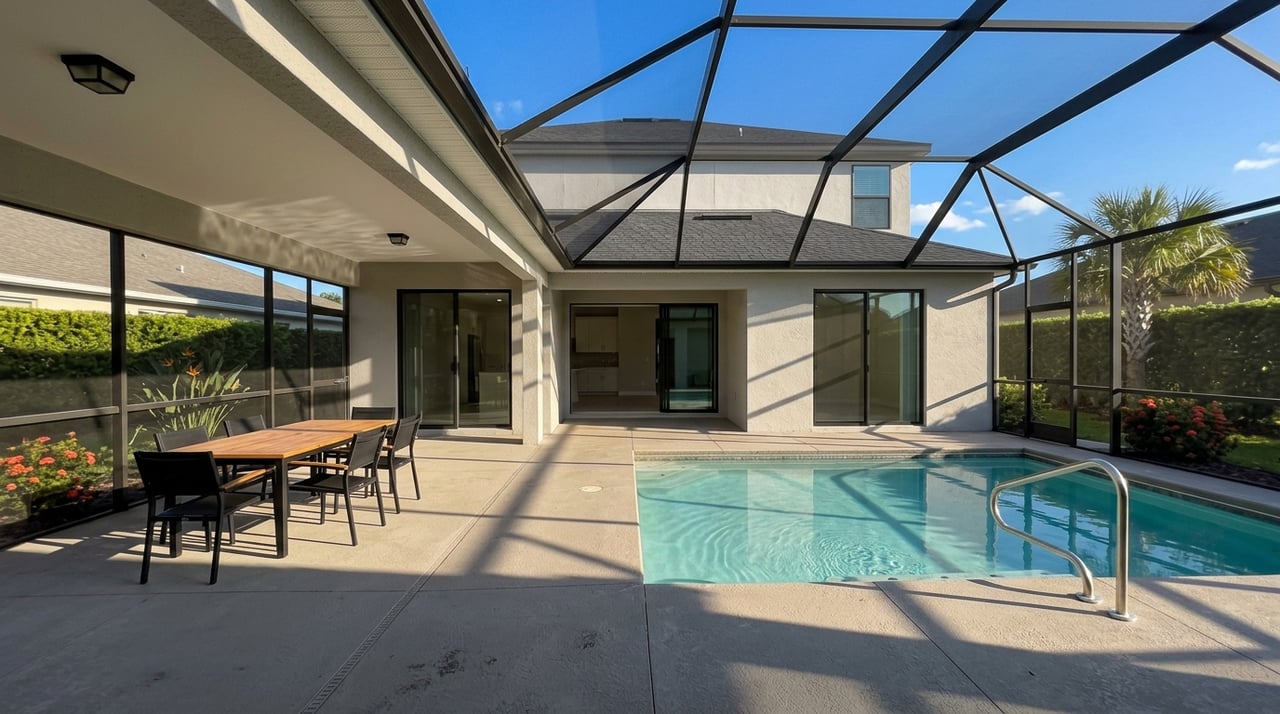
Single-family vacation homes usually fit buyers targeting larger groups or a more private stay. These homes often align with demand for private pools, more sleeping capacity, and a bigger overall layout.
In Davenport, Solterra Resort includes both townhomes and single-family homes. The Retreat at ChampionsGate also includes single-family homes on multiple lot sizes in addition to townhomes. If your long-term strategy leans toward a larger property and a more premium guest setup, single-family communities deserve serious attention.
A beautiful clubhouse is easy to market, but the management stack is what often shapes your ownership experience. In communities built around vacation-home use, operational clarity can be just as important as the home itself.
Bahama Bay states that it has an official on-site vacation management team. Azur says a professional operator provides rental and property management services. The Retreat at ChampionsGate says Castle Group provides management services, and Solterra identifies Artemis as its HOA management company.
That does not mean every community works the same way. It means you should ask clear questions about who manages what, how guest operations are handled, and whether the setup matches the level of involvement you want. If you prefer a more hands-off approach, a community with a defined management structure may be easier to evaluate.
One of the biggest mistakes buyers make is focusing on projected income before reviewing the governing documents. In Davenport vacation communities, the rules can directly affect how you use the property and what responsibilities you carry.
Start with the basics:
For example, Solterra’s HOA and CDD materials show that community rules can get very detailed. They address exterior appearance, amenity access, guest use, reservations, user fees, and owner responsibility for renter conduct and charges. The Retreat at ChampionsGate also posts assessment information, gate access details, and facility rules.
These details matter because they affect your day-to-day ownership, your monthly costs, and the guest experience. A community may look similar on the surface to another nearby option, but the rule structure can feel very different in practice.
If you are building a long-term strategy, treat compliance as part of the investment from day one. In Florida, vacation rentals fall into a regulated lodging category. The state requires owners of new public lodging establishments, and new owners of existing establishments, to obtain a license from the appropriate state division before operating.
Within Davenport, short-term rental units are allowed under state statutes, and the city points readers to its code of ordinances. The city also states that businesses located or operating inside city limits must pay both a City of Davenport business tax receipt and a Polk County business tax receipt. The city further notes that the local receipt is not itself a license or certification.
The city’s business tax receipt application also asks for HOA approval if applicable, a copy of the state DBPR license if applicable, and a Polk County tax receipt copy. That is a strong reminder that buying the property is only part of the process. You also need to confirm that your paperwork, approvals, and operating setup are aligned.
Long-term strategy depends on clear math. It is not enough to look at a mortgage payment and estimate seasonal demand. You need to account for recurring taxes, assessments, and any community-specific operating drag.
Polk County says tourist development taxes are remitted on transient accommodations and lists the county rate as 5%. Florida also applies discretionary sales surtax to transient rentals. In practical terms, owners need to budget for lodging-related tax compliance in addition to normal ownership costs.
Assessments also vary by community and by product type. The Retreat at ChampionsGate posts 2026 assessments ranging from $343 to $402 per month depending on the home type. Solterra’s ownership materials also show that maintenance responsibilities can differ based on whether an item falls to the homeowner, the HOA, or the CDD.
That is why two homes with similar list prices may not perform the same over time. Monthly obligations, maintenance splits, and community structures can materially change the ownership picture.
This is an easy detail to miss in the Davenport area. The City of Davenport has a small geographic footprint, and the city’s business tax process applies to properties located or operating inside city limits.
Before you assume which local procedures apply, verify whether the property is actually inside the City of Davenport or outside city limits. That simple step can help you avoid confusion about filings, taxes, and next steps after closing.
If you are narrowing down vacation-home communities in Davenport, use a simple comparison framework. Look at each option through the lens of fit, not hype.
Ask yourself:
When you compare communities this way, you get a much more realistic picture of what ownership will look like after closing. That is the kind of thinking that supports a stronger long-term strategy.
Many Davenport communities are designed to appeal to vacation-home buyers, and that can be a real advantage. Still, a strong brand name or attractive amenity package should not be the deciding factor on its own.
The better approach is to choose a community where the product type, rule structure, and cost profile all support your goals. A condo-style resort, a townhome community, and a detached single-family resort home can all be smart choices. The key is choosing the one that fits how you want to own, operate, and hold the property over time.
If you want help comparing Davenport vacation-home communities with a long-term lens, The Acevedo Team can help you evaluate options and move forward with clarity.
June 4, 2026
May 28, 2026
May 21, 2026
May 14, 2026
May 7, 2026
April 23, 2026
April 16, 2026
April 9, 2026
April 2, 2026
Our experience and excellent negotiating skills are the reason why you could trust us with one of the most important purchases of your life.